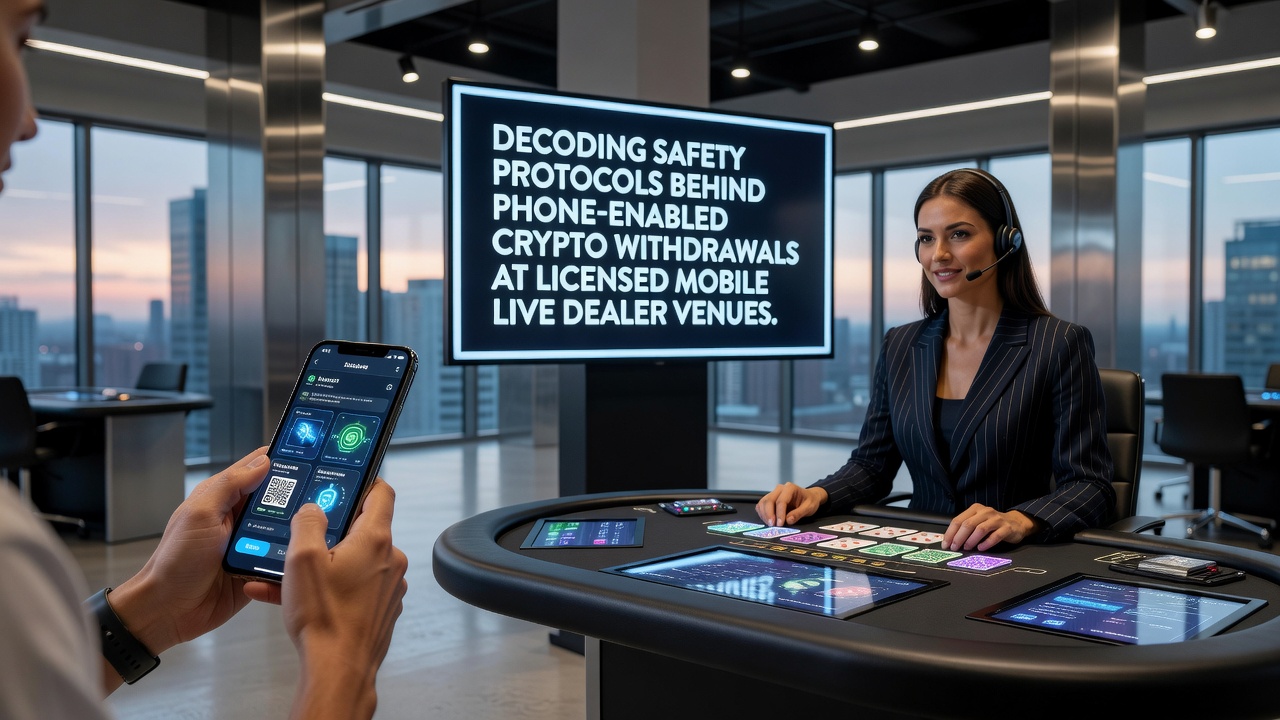
Security Frameworks for Phone-Enabled Crypto Payouts in Licensed Live Dealer Mobile Platforms
Security frameworks supporting phone-enabled crypto withdrawals at licensed mobile live dealer venues rely on layered authentication systems that combine device verification with blockchain confirmation while operators maintain compliance with regional licensing requirements across multiple jurisdictions. These protocols address risks associated with mobile billing integrations and digital asset transfers by enforcing real-time checks that confirm user identity before any funds move from platform wallets to external addresses.
Operators begin the process by requiring multi-factor authentication that pulls data from phone networks and cryptographic keys stored on user devices and this approach reduces unauthorized access attempts according to reports from the Alcohol and Gaming Commission of Ontario. Live dealer sessions add another verification layer because platforms cross-reference session logs with withdrawal requests to detect anomalies such as sudden location changes or mismatched device fingerprints.
Core Authentication and Encryption Standards
Encryption standards form the backbone of these systems where end-to-end protocols protect both phone billing data and crypto transaction details during transmission and storage and researchers at institutions studying digital payment security note that AES-256 combined with elliptic curve cryptography creates barriers against interception that remain effective even as mobile networks evolve. Phone-enabled deposits trigger immediate wallet updates while withdrawal requests undergo separate review cycles that include smart contract audits to ensure funds match verified balances on the underlying blockchain.
Those who manage licensed venues often integrate API connections between mobile carriers and payment processors so that billing records align with crypto ledger entries and this synchronization helps flag discrepancies before they escalate into larger issues. Data shows that platforms operating under strict oversight complete these checks within seconds yet still maintain audit trails that regulators can access on demand.
Regulatory Compliance Across Regions
Licensing bodies in North America and parts of Europe mandate regular penetration testing and third-party audits that cover mobile interfaces handling crypto outflows and these requirements force operators to update protocols whenever new vulnerabilities surface in either phone billing channels or distributed ledger technologies. Venues planning expansions around October 2026 have begun incorporating quantum-resistant algorithms into their withdrawal pipelines in anticipation of future computational advances that could challenge current encryption methods.

One study from academic teams examining blockchain applications in gaming environments revealed that licensed sites using phone-verified crypto withdrawals experience fewer chargeback disputes compared with traditional methods because transaction finality occurs on public ledgers that both parties can inspect independently. Observers note that such transparency also supports responsible gambling tools since withdrawal limits can be enforced directly through smart contracts tied to player accounts.
Integration of Phone Billing with Blockchain Networks
Integration challenges arise when phone billing systems must communicate with blockchain networks that operate on different consensus mechanisms yet successful platforms solve this by routing all transactions through centralized compliance hubs that apply uniform rules regardless of teh underlying crypto asset. These hubs verify that withdrawal addresses belong to the same user who initiated the phone deposit and they reject requests that fail geographic or velocity checks built into the licensing agreements.
Industry reports indicate that operators refresh their security certificates quarterly while maintaining 24-hour monitoring centers staffed by teams trained to respond to both technical breaches and regulatory inquiries. This continuous oversight keeps pace with emerging threats such as SIM-swapping attacks that target phone-based verifications and forces platforms to adopt additional safeguards like biometric confirmation for high-value transfers.
Future Developments and Industry Trends
By October 2026 several licensed operators expect to roll out enhanced zero-knowledge proof systems that allow withdrawal validation without exposing full transaction details to every network participant and these upgrades build on existing frameworks to balance privacy with the transparency demands of regulators. External sources such as those published by the European Gaming and Betting Association highlight how cross-border cooperation among licensing authorities helps standardize safety expectations for mobile crypto features across different markets.
People who analyze transaction patterns at these venues find that the combination of phone billing speed and crypto finality creates efficient cash flow while the embedded security layers prevent most common fraud vectors before they reach completion stages. Ongoing refinements continue as new mobile operating systems introduce updated security APIs that operators can leverage to strengthen device-level controls.
Conclusion
Overall the safety protocols behind phone-enabled crypto withdrawals at licensed mobile live dealer venues demonstrate how regulatory mandates and technical innovations intersect to protect users and assets in real time and these systems evolve through ongoing audits and cross-industry collaboration that prioritize verifiable security over convenience alone.